
Expert Electricians in Southampton & Test Valley | Test Valley Electrical Services
Searching for a reliable, professional electrician in the Southampton and Test Valley region? Welcome to Test Valley Electrical Services, where we prioritise your safety and specific requirements over everything else.
We believe every customer is unique. That’s why we go above and beyond to provide tailored electrical solutions designed for your specific home or business needs—ensuring you always feel like a valued partner, never just a number on an order form.
From complex electrical engineering to minor domestic repairs, we provide transparent, fixed-price services across the South Coast. Our most popular expert services include:
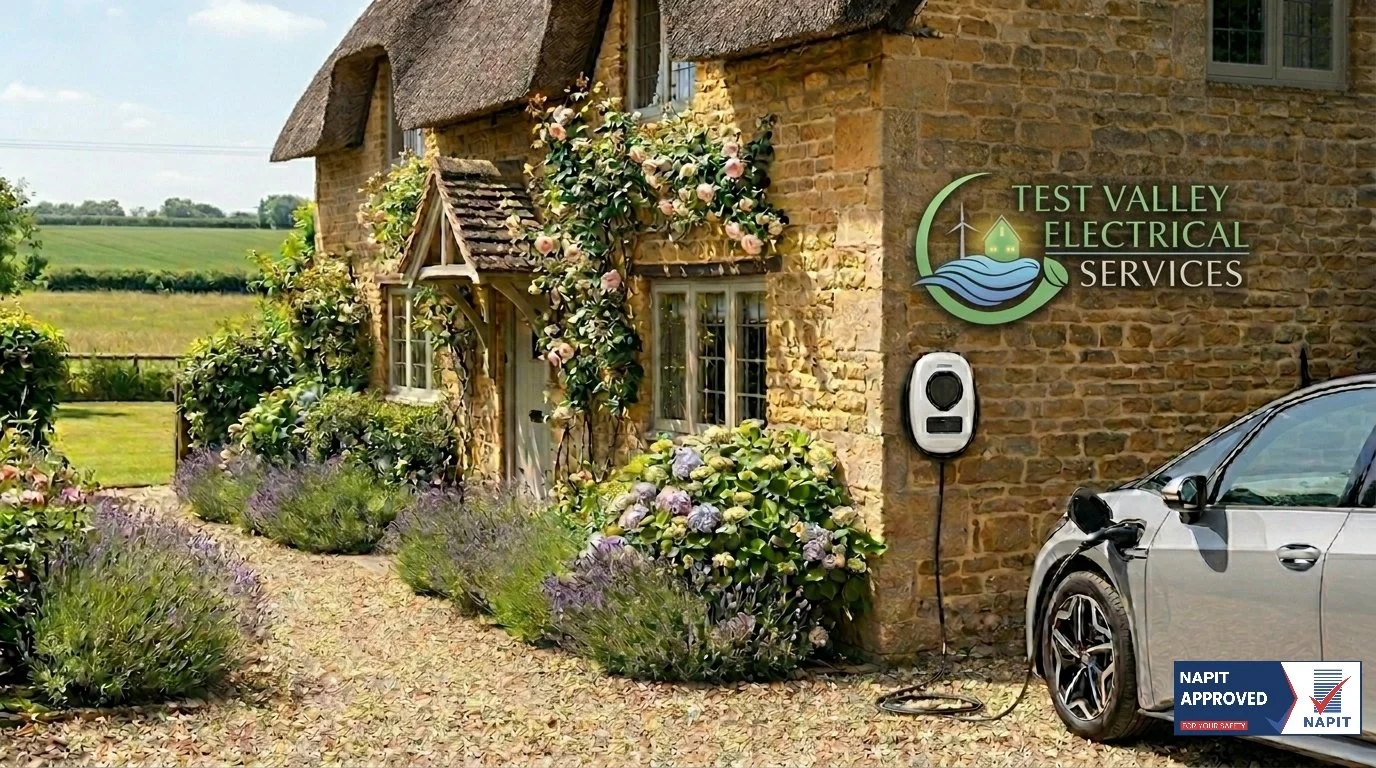
EV Charger Installations:Professional electric vehicle charging points supply and fitting service starting from just £800.00. Labour only services for customer supplied EV charging equipment are also available.
EICR & Safety Inspections: Comprehensive Electrical Installation Condition Reports from £150.00 for 1-2 bedroom homes, and £225.00 for a 2-4 bedroom homes.
Consumer Unit Upgrades: Modern fuse board replacements and upgrades from £625.00 for small homes and £775.00 for standard homes.
Ready to start your project? Explore our services or contact Jamie directly for a free, no-obligation quote.
Or fill out our quick enquiry form below—we look forward to helping you today!
*Quoted prices exclude VAT.
Services We Provide
Electrical Testing
»
New Sockets & Lights
»
Landlord Inspections
»
Fuseboard Upgrades
»
Fault Finding
»
Business Support Services
»
Home Re-wires
»
PAT Testing
»
Electrical Testing » New Sockets & Lights » Landlord Inspections » Fuseboard Upgrades » Fault Finding » Business Support Services » Home Re-wires » PAT Testing »
Give us a call or get in touch below
0800 980 3055

Our Services
-
EV charger installations from *£800.00, carried out by our qualified professional installers trained and certified to the latest standards. We handle site surveys, cable routing, consumer unit checks and any necessary minor upgrades to ensure safe, compliant charging at home or at your business. All work is completed to current regulations with full testing and certification provided on completion, and we offer clear, fixed pricing with optional warranties and ongoing support. Contact Test Valley Electrical Services for a tailored quote.
*Representative price excludes VAT when using an 7kw 230v EV charger from our budget range, other external factors may apply that may effect your final quote amount.
-
Replacing an old fuseboard with a modern RCBO consumer unit provides improved safety, reliability and compliance with the latest edition of the wiring regulations. Our service removes your existing outdated fuseboard and installs a new consumer unit fitted with individual RCBO protection for each circuit, combined surge protection and fire-rated enclosure for enhanced safety.
What the upgrade includes
RCBO protection: Each circuit is protected by an RCBO (Residual Current Breaker with Overcurrent protection), delivering both earth-fault (RCD) and overcurrent (MCB) protection per circuit. This reduces nuisance trips and ensures faults are isolated to the affected circuit only.
Surge protection: A dedicated surge protection device is fitted to help safeguard sensitive appliances and electronics from transient overvoltages caused by lightning strikes or power surges.
Fire-rated enclosure: We install the new consumer unit in a fire-rated enclosure designed to provide additional containment in the event of an electrical fire, helping to reduce the risk of fire spreading from the distribution equipment.
Compliance with the latest wiring regulations: All work is carried out in accordance with the current edition of BS 7671 (IET Wiring Regulations), ensuring your installation meets statutory safety standards.
Professional installation and testing: Our qualified electricians will install the consumer unit with care and attention, complete all necessary wiring checks and electrical testing (insulation resistance, continuity, polarity, earth fault loop impedance, RCD testing, etc.), and provide required certification on completion.
Tidy, considerate service: We take pride in our workmanship, leaving the area clean and explaining any changes to your circuits and how to use the new consumer unit.
Why choose this upgrade
Improved safety through individual circuit protection and RCD functionality.
Better protection for electronics with surge suppression.
Reduced risk of electrical fires with a fire-rated enclosure.
Compliance with current regulations and full certification on completion.
Minimsed disruption thanks to experienced installers.
Contact us for a free quote and to arrange a survey.
*Representative price excludes VAT. Standard package = a single consumer unit between 5 - 11 circuits. Other external factors may apply that may effect the final quote amount.
-
Consumer unit upgrade for a smaller property
We offer consumer unit (fuseboard) upgrades tailored to smaller properties. If your home has a compact electrical layout or a smaller current unit, we’ll provide a neat, compliant installation that meets current safety standards without unnecessary disruption.
What we do
Replace ageing or unsafe consumer units with a modern, compliant unit sized appropriately for a small property.
Install RCD protection and appropriate MCBs for ring circuits, lighting, and any dedicated circuits (e.g. cooker, shower) as required.
Reconfigure and label circuits clearly for ease of use and future maintenance.
Test all circuits after installation and provide a certificate of compliance.
When this is suitable
Small homes, flats or cottages with fewer circuits and lower overall load.
Properties where the existing consumer unit is outdated, has no RCD protection, or is unsafe.
When you want a compact, tidy installation that matches the property’s needs.
Practical benefits
Improved electrical safety and reduced risk of shocks and fire.
More reliable circuit protection and easier fault diagnosis.
Neat, space-saving unit suited to limited cupboard or under-stairs locations.
Full test results and certification for landlord or insurance requirements.
Typical timescale and disruption
Most upgrades for smaller properties can be completed in a day.
We aim to keep disruption minimal: power will need to be off during the work, but we plan the job to reduce downtime.
We tidy up and remove old equipment on completion.
Cost guidance
Costs vary by property and required work. Smaller consumer unit upgrades are generally less expensive than larger installs, but we’ll provide a free, no-obligation quote after assessing your property.
How to book Contact Test Valley Electrical Services to arrange a site visit and free quote. We’ll assess your existing consumer unit, recommend the right replacement and give a clear price and timescale.
*Representative price excludes VAT. Standard package = a single consumer unit between 5 - 11 circuits. Other external factors may apply that may effect the final quote amount.
-
Call out response service charge (common for local residents) where that total travel time and service time falls within the 45 minute mark, the competitive rate of *£75.00 applies.
*Price excludes VAT and any van stock and/or materials used during the service.
-
Standard Call out response service charge, travel time is included in the time.
*Price excludes VAT and any van stock and/or materials used during the service.
-
An Electrical Installation Condition Report Service for any home up to and including 2 bedroom and up to 6 electrical circuits.
*Price excludes VAT, exclusive to locations within the test valley region, off peak boards and circuits will be subject to an additional charge.
-
An Electrical Installation Condition Report Service for a 2-4 bedroom home with 6-12 electrical circuits.
*Price excludes VAT, exclusive to locations within the test valley region, off peak boards and circuits will be subject to an additional charge. Satisfactory report outcome is not guaranteed.
Get in Touch
Frequently Asked Questions (FAQs)
What is an EICR and do I need one as a landlord?
1
An EICR is an Electrical Installation Condition Report.
Think of it as a health check for the electrics in a property — wiring, sockets, fuse boards, light fittings, and anything that forms part of the fixed electrical system.
It tells you:
• Whether the electrics are safe
• If anything is damaged or worn
• What needs fixing and how urgently
An EICR outcome falls in either of two categories; “Satisfactory” and “Unsatisfactory”. As a Landlord you would require a “Satisfactory” outcome report in order to remain compliant. Observations on the report would determine the overall status and condition of your property electrical installation.
How much does an EICR cost and how long does it take?
2
An EICR will usually costs around £150-225 depending on the average 1-4 bedroom property size, and typically takes about 2–4 hours on site, after which you receive a report showing if anything needs fixing and you must complete any required repairs to keep the property compliant.
What areas do you cover in Hampshire?
3
We cover Southampton, North Baddesley, Eastleigh, Chandlers Ford, Romsey, Test Valley areas and beyond. We also cover East Wiltshire areas. If you are unsure if we cover your location, then please get in touch, and more than likely we can cover your location.
Do you offer emergency or same-day call-out services?
4
We as a business offer a 24/7 call out, and intend to accommodate and respond to all received Emergency and Same-Day call enquiries. Our response times to each case can vary during busy periods and operating locations.
What qualifications and certifications do your electricians have?
5
Our electricians are fully vetted and registered with the NAPIT Competent Person Scheme, hold ECS Gold Cards, and are City & Guilds qualified to the latest BS 7671 standards for both electrical installation and inspection and testing. All membership details, accreditation numbers, and supporting evidence can be provided on request.
What is involved in a fusebox/consumer unit upgrade and how much does it cost?
6
Our consumer unit (fuse board) upgrade service range from £625.00-£775.00 for typical 1-4 bedroom sized homes. This baseline price covers the installation of a modern, fully compliant consumer unit designed to improve the safety, reliability, and overall performance of your electrical system.
The final cost can vary depending on several factors, including:
• Number of Consumer Units: Properties with more than one fuse board will require additional materials, testing, and installation time.
• Property Size & Number of Circuits: Larger homes or those with an above‑average number of circuits may need a more complex consumer unit and extended labour.
• Supply & Earthing Arrangements: Unique or outdated supply characteristics, earthing upgrades, or the need to correct existing issues can influence the overall cost.
• Access & Installation Conditions: Limited access to the existing fuse board, tight spaces, or the need for additional remedial work can affect installation time and pricing.
Every upgrade includes full testing and certification to ensure your installation meets the latest electrical safety standards.
Do you do PAT testing? Who needs it and how often?
7
We do offer PAT Testing services. PAT testing is a quick safety check to make sure electrical appliances are safe. It’s mainly needed by businesses, landlords, and anyone responsible for workplaces or rented properties. There’s no fixed legal schedule, but higher‑risk equipment should be tested more often. Think office equipment every year or two, and construction tools more frequently - As low as 6 months. An annual re-inspection period is the typical baseline re-test frequency.
What payment methods do you accept?
8
We offer a wide range of convenient payment options to ensure a smooth and flexible transaction experience for all clients. All major payment methods are accepted with the exception of American Express. This includes:
• Debit and credit cards (Visa, Mastercard)
• Bank transfers
• Contactless and digital wallet payments (Apple Pay, Google Pay, Samsung Pay)
• Paypal
In addition, we offer partnering with third‑party financing providers to offer flexible payment plans for eligible purchases. These platforms allow clients to spread the cost over manageable instalments, subject to approval by the financing provider.
Do you provide guarantees or certifications on your work?
9
Yes — all work is certified and guaranteed. As a NAPIT‑registered electrical business, We issue the appropriate Electrical Installation Certificate or Minor Works Certificate, and where applicable I notify Building Control under Part P. My workmanship comes with a standard 12‑month guarantee, and all supplied materials include the manufacturer’s warranty.
Can you handle small jobs like adding a socket, installing lights, or minor repairs?
10
Absolutely — We handle all types of small domestic jobs. Whether it’s adding a socket, installing new light fittings, replacing accessories, or carrying out minor repairs, We’re happy to take on smaller tasks as well as larger projects. No job is too small.
What happens if my electrical installation fails my EICR?
11
If an installation does not pass an EICR, we provide a clear report outlining all observations and their classifications (C1, C2, or FI) - with photographic evidence where applicable. The cause of an unsatisfactory result can vary significantly — anything from a single cracked socket or damaged switch to a property requiring a full rewire. We can provide a quotation for any remedial work needed to bring the installation up to a satisfactory standard, and once all corrective work is completed, we issue a new EICR confirming compliance.
Do you offer home re-wires or services for new builds?
12
Yes — we offer full and partial rewires, as well as electrical services for extensions and new‑build properties. Our team manages everything from initial design and first‑fix installation through to final testing and certification, ensuring all work meets current wiring regulations and NAPIT standards.
Do you work on three-phase commercial premises?
13
Yes — we offer full electrical services at home, commercial and even industrial buildings, single phase or three-phase installations. We got it covered.
14
Can you sign off someone else’s electrical installation work?
We do not typically provide sign‑off for electrical installation work carried out by third parties on licensed projects, particularly where wiring has already been plastered over or buried, as this restricts the level of inspection we are able to perform. However, if we are contacted before any work begins, we may be able to offer a third‑party certification service. This is subject to strict conditions, which must be met in full before we can undertake any form of sign‑off. Such requests would be treated as a case by case basis, so contact us if you would like further information.
How do I book an appointment or get in touch?
15
You can reach us anytime via our contact form or email. We aim to respond quickly—usually within one business day.
How often should I have my electrics tested/inspected if I'm not a landlord?
16
Signs Your Electrics May Be Unsafe or in Need of Improvement
A home’s electrical system should operate quietly in the background. When it starts drawing attention to itself, that’s often a sign something isn’t right. Below are some of the most common indicators that your electrics may be outdated, deteriorating, or potentially unsafe.
1. An Outdated Fusebox**
- Older fuseboxes with *rewireable or withdrawable fuses* instead of modern circuit breakers are a major red flag.
- These systems offer far less protection, are slower to disconnect during a fault, and can mask underlying issues.
2. Faulty or Damaged Socket Outlets
- Sockets that no longer work, feel loose, or show visible signs of overheating—such as scorch marks, discolouration, or a melted appearance—should be checked immediately.
- Overheating often points to poor connections or overloaded circuits.
3. Flickering or Dimming Lights
- Occasional flicker can be normal, but persistent flickering or lights dimming when appliances switch on may indicate loose wiring, overloaded circuits, or voltage fluctuations.
4. Burning Smells or Unusual Odours
- A burning or “fishy” smell coming from sockets, switches, or the consumer unit is a serious warning sign.
- This can indicate overheating components, failing insulation, or arcing.
5. Tingling or Shocks from Metal Surfaces
- Feeling a mild shock or tingling sensation when touching metal appliances, taps, or other conductive surfaces suggests a potential earthing or bonding fault.
- This is a high‑risk situation that needs urgent attention6. Lack of Inspection or Testing Records
- If there’s no evidence of a previous Electrical Installation Condition Report (EICR), or the last one was carried out many years ago, the condition of the installation is essentially unknown.
- Regular inspection ensures hidden faults are identified before they become dangerous.
7. Other Subtle Warning Signs
- Frequently tripping breakers
- Buzzing or crackling sounds from switches or the consumer unit
- Excessive use of extension leads due to too few sockets
- Warm or vibrating switches and outlets
We recommend 10 year long first interval for a new property/newly re-wired property. All subsequent inspection/testing intervals strongly recommended to be no greater than 5 years, or during a change of tenancy at the property.
17
What are the signs that my electrics need updating or are unsafe?
18
Are your team members fully qualified to the latest standards in electrics?
Yes, our team members are fully qualified to the following electrical certification and accreditations:
-Level 3 City & Guilds in Electrotechnical Technology (Buildings & Structures).
-City & Guilds in Inspection, Testing & Initial Verification of Electrical Installations.
-City & Guilds in Periodic Inspection, Testing & Verifications of Electrical Installations.
-City & Guilds in Understanding the Fundamental Principles of the 18th Edition of the BS7671 Wiring Regulations.
-Holders of NVQ Level 3 and AM2 Assessment Certification.
-City & Guilds Requirements for the Design and Installation of Domestic and Small Commercial Electric Vehicle Charging Installations.
-Electrical Certifications Scheme Gold Card Holders.
We are more than happy to provide evidence of these on request.
19
If you are carrying out an EICR at my property, and you find faults with my wiring, what happens then?
We will do our best in the time conditions available to attempt on locating, and rectify wiring faults discovered during our visit. Depending the circuit complexity, local conditions and property type, we would aim use our experience, knowledge and expertise to identify and resolve within a reasonable time frame. If the fault nature is deemed too time consuming to resolve within the appointment time frame. We would communicate with the customer on a return visit package.